
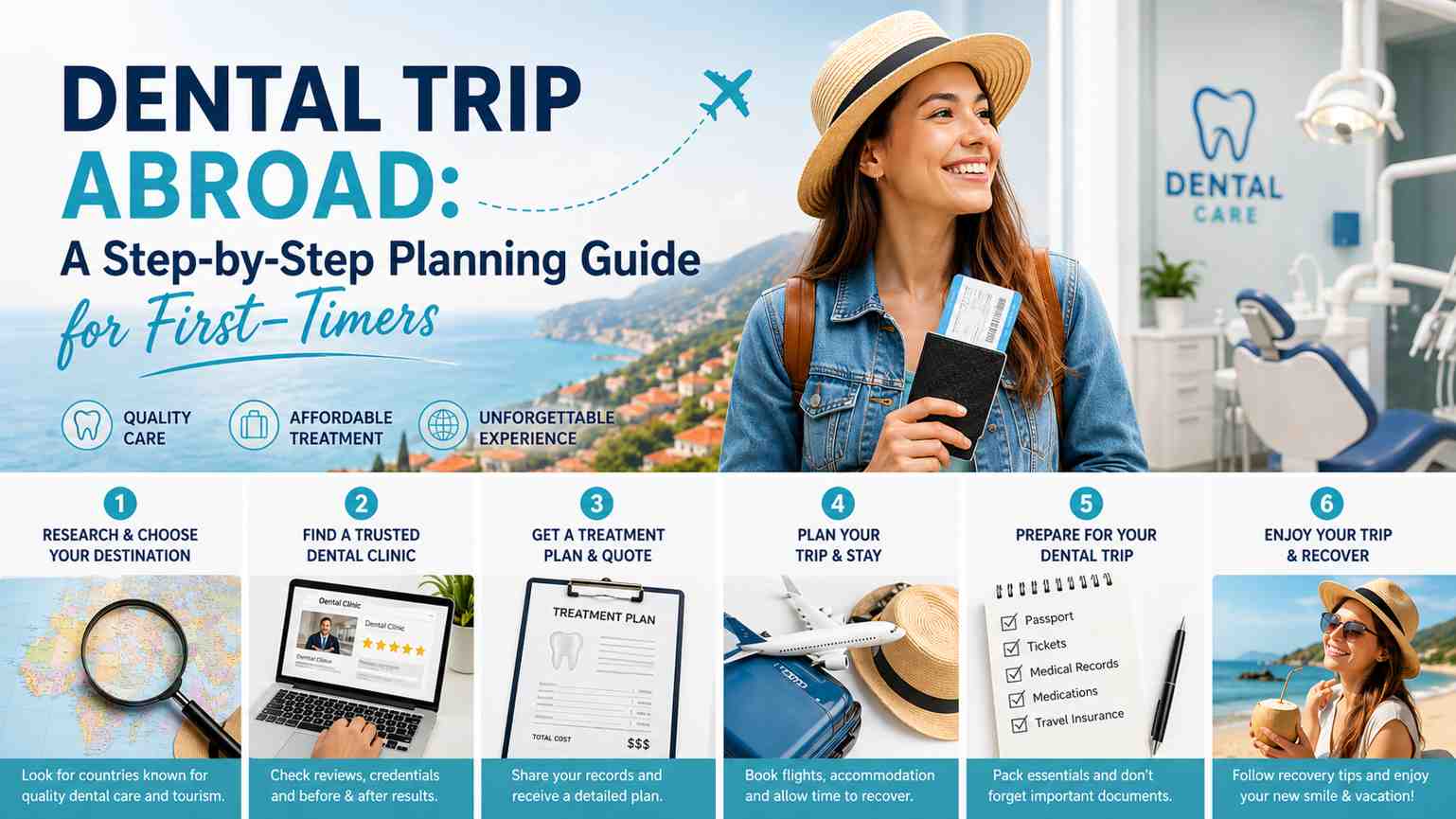
Dental Trip Abroad: A Step-by-Step Planning Guide for First-Timers
Planning dental treatment abroad for the first time can feel overwhelming. Many patients start by asking the same question: which country is best for dental treatment in Europe? The answer depends on more than price alone.
The best country for dental work in Europe for you will depend on your treatment needs, travel budget, comfort with flying, and how easy it is to return for follow-up care. Some patients want the most established option. Others are looking for better value, shorter travel time, or easier access to clinics that regularly treat international patients.
That is why it helps to compare destinations in a practical way. Instead of focusing only on cost, look at safety, clinical standards, transparency, travel logistics, and aftercare. Once you compare countries using those factors, it becomes much easier to shortlist clinics and plan your trip with confidence.
This guide will walk you through the process step by step, including a country comparison, key questions to ask, common red flags, and how to choose the best place to get dental work done overseas for your case.
TL;DR: The best country for dental treatment abroad depends on your priorities. Compare Hungary, Turkey, Serbia, Indonesia, Albania, Poland, and Romania based on safety, clinic standards, transparent pricing, flight convenience, and aftercare. Do not choose based on price alone, the right destination is the one that best fits your treatment needs, travel plans, and comfort level.
- Dental Trip Abroad: A Step-by-Step Planning Guide for First-Timers
- Why Patients Go Abroad for Dental Care
- How to Choose the Best Country for Dental Work in Europe
- 1. Safety and regulation
- 2. Clinical standards and experience
- 3. Pricing transparency
- 4. Travel logistics
- 5. Aftercare and long-term support
- Compare Popular Destinations for Dental Treatment Abroad
- How to Narrow Down Your Shortlist
- Step-by-Step Planning Guide for First-Timers
- Step 1: Understand what treatment you may need
- Step 2: Shortlist countries that fit your needs
- Step 3: Compare clinics within those countries
- Step 4: Request preliminary treatment plans
- Step 5: Compare plans carefully
- Step 6: Ask the right questions
- Step 7: Plan the full cost
- Step 8: Prepare for travel properly
- Step 9: Prioritize treatment and recovery
- Step 10: Take home written records
- Step 11: Stay engaged with aftercare
- Red Flags to Watch For
- First-Timer Checklist for Dental Treatment Abroad
- Explore Options & Book Your Dental Treatment in Europe with Booking.Dentist!
Why Patients Go Abroad for Dental Care
Patients consider treatment abroad for many different reasons. Cost is one of the most common, but it is rarely the only factor.
Many people look outside their home country because they want:
- More affordable treatment options
- Faster appointment availability
- Access to experienced clinics that regularly treat international patients
- Clearer pricing before committing
- A chance to compare multiple treatment plans
- The option to combine treatment with travel
Some patients are looking for a single crown or implant. Others need more extensive work such as bridges, veneers, full-mouth rehabilitation, or staged implant treatment. In all cases, planning matters.
The best country for dental work in Europe is not automatically the cheapest one. It is the destination that offers the right mix of safety, standards, transparency, travel convenience, and aftercare for your case.
That is why first-time patients should compare countries carefully before choosing a clinic.
How to Choose the Best Country for Dental Work in Europe
Before comparing individual destinations, it helps to use a neutral framework. When patients ask which country is best for dental treatment in Europe, they are usually trying to balance five things:
1. Safety and regulation
Look for destinations where clinics operate within a clear professional framework and where dentists, specialists, and treatment processes can be verified.
2. Clinical standards and experience
The best place to get dental work done overseas should not just look impressive online. It should also show experience with the treatment you need, from diagnostics to aftercare.
3. Pricing transparency
A trustworthy clinic should explain what is included, what might change after an in-person examination, and what additional costs may apply.
4. Travel logistics
The best place in Europe for dental work should also make practical sense. Flight access, local transport, accommodation, and the ease of returning for follow-up all matter.
5. Aftercare and long-term support
Dental treatment does not end when you leave the clinic. Clear aftercare instructions, follow-up communication, and practical support after returning home are essential.
Once you understand these five factors, it becomes much easier to compare countries in a realistic way.
Compare Popular Destinations for Dental Treatment Abroad
If you are trying to decide on the best country for dental work in Europe, here is a practical comparison of countries many patients consider when researching treatment abroad.
Rather than naming one universal winner, the goal is to help you understand the strengths, trade-offs, travel style, and patient fit of each destination.
Quick Comparison Table
| Country | Main advantages | Possible drawbacks | Best for | Often convenient for patients traveling from |
|---|---|---|---|---|
| Hungary | Long-established reputation, strong international patient experience, practical for European city-based treatment trips | Popular market, so clinic comparison still matters | Patients who want a well-known and established dental travel option | UK, Ireland, Germany, Austria, Switzerland, France, Benelux, Scandinavia |
| Turkey | Wide clinic choice, strong travel hubs, competitive pricing, popular for cosmetic and restorative work | Larger variation between clinics, so due diligence is essential | Patients who want broad choice and major-city accessibility | UK, Ireland, Germany, Balkans, Middle East, wider Europe |
| Serbia | Often good value, practical regional access, less saturated feel | Smaller international profile than some other destinations | Patients who want a more low-profile option in Southeast Europe | Germany, Austria, Switzerland, Balkans, Central Europe |
| Indonesia | Relevant for Asia-Pacific travelers or longer stays abroad | Less practical for most Europe-based patients due to distance | Patients based in Australia, New Zealand, Southeast Asia, or long-stay travelers | Australia, New Zealand, Singapore, Malaysia, Asia-Pacific |
| Albania | Affordable, increasingly considered, relatively convenient for parts of Southern Europe | Smaller market, so clinic-level research matters even more | Patients looking for value and Mediterranean accessibility | Italy, Greece, Balkans, Germany, UK, Southern Europe |
| Poland | Good infrastructure, accessible cities, practical for many European patients | May not always be the lowest-cost option depending on case and city | Patients seeking balance between logistics, standards, and convenience | UK, Ireland, Germany, Scandinavia, Central and Western Europe |
| Romania | Competitive pricing, growing interest from international patients, major city options | Quality can vary, so provider selection is important | Patients looking for value with city-based travel options | UK, Italy, Germany, Spain, France, Central and Eastern Europe |
Hungary
Hungary is one of the destinations that often comes up early when patients ask which country is best for dental treatment in Europe. It has a long-standing reputation among international patients and is commonly associated with clinics that are used to treating visitors from abroad.
One of Hungary’s strongest advantages is familiarity. For many first-time patients, it feels like a well-established option rather than an unknown one. Clinics in this market often understand how to handle pre-travel communication, preliminary treatment planning, and the practical needs of international patients.
Advantages
Hungary is often seen as a good fit for patients who want an established destination with a strong dental travel reputation. It may appeal to those looking for restorative work, implants, crowns, bridges, or broader treatment plans that require a more structured approach.
Possible drawbacks
Because Hungary is so well known, patients still need to compare clinics carefully rather than assume all providers offer the same standard. A strong country reputation is useful, but your experience will still depend on the clinic you choose.
Best for
Hungary may be best for patients who want a destination with a long international track record, practical European access, and a city-based treatment trip that feels organized and familiar.
Travel and flight accessibility
Hungary is often convenient for patients traveling from the UK, Ireland, Germany, Austria, Switzerland, France, Benelux countries, and Scandinavia. It is usually a good match for patients looking for a short European treatment trip rather than a long resort-style stay.
Explore clinics and treatment options in Hungary on booking.dentist.
Turkey
Turkey is often considered by patients who want broad choice, strong flight connectivity, and competitive pricing. It is highly visible in the international treatment market and offers many options across different types of dental care.
For some travelers, Turkey stands out because of its scale. There are many clinics, major international airports, and a strong tourism infrastructure, which can make planning feel easier.
Advantages
Turkey often appeals to patients who want a large range of providers, accessible travel routes, and options for cosmetic, restorative, or more extensive treatment plans. It can suit patients who want flexibility in destination and travel style.
Possible drawbacks
Because the market is large and heavily marketed, there can be significant variation between clinics. Patients should be especially careful to compare treatment plans, communication quality, credentials, and aftercare arrangements before booking.
Best for
Turkey may be a strong option for patients who want many choices, major-city accessibility, and a destination that can work for both dental treatment and a longer stay.
Travel and flight accessibility
Turkey is often convenient for patients traveling from the UK, Ireland, Germany, the Balkans, and many other parts of Europe, as well as the Middle East. It may work well for those who prefer a large, well-connected travel hub.
Explore clinics and treatment options in Turkey on booking.dentist.
Serbia
Serbia is sometimes less discussed than larger dental travel destinations, but that can also make it appealing. Some patients prefer a destination that feels more practical and less crowded by international medical marketing.
When comparing the best place to get dental work done overseas, Serbia may appeal to patients looking for a more straightforward and lower-profile option.
Advantages
Serbia may offer good value and relatively manageable travel for patients coming from parts of Central and Southeast Europe. It can appeal to travelers who care more about practicality than about choosing the most heavily advertised destination.
Possible drawbacks
Serbia may not have the same global dental travel profile as more widely known markets, which means patients may need to spend more time researching clinics and comparing providers.
Best for
Serbia may suit patients who want a regional option with potentially strong value and a more functional, less tourism-heavy feel.
Travel and flight accessibility
It may be especially convenient for patients traveling from Germany, Austria, Switzerland, the Balkans, and parts of Central Europe.
Explore clinics and treatment options in Serbia on booking.dentist.
Indonesia
Indonesia is different from the other countries in this comparison because it is generally more relevant to travelers based in the Asia-Pacific region or to patients planning a longer overseas stay.
For Europe-based first-timers, it may not be the most practical answer to what is the best place in Europe for dental work, but it can still be a useful option in a broader treatment-abroad comparison.
Advantages
Indonesia may appeal to patients already living in Asia, traveling through the region, or planning a longer stay abroad. For the right traveler, it can combine treatment with a more extended recovery or travel plan.
Possible drawbacks
For most Europe-based patients, the main drawback is distance. Long-haul travel can make return visits, recovery planning, and aftercare less convenient, especially for staged or surgical treatment.
Best for
Indonesia may be best for patients in Australia, New Zealand, Southeast Asia, or those who are already planning extended travel in the region.
Travel and flight accessibility
It is generally more practical for Asia-Pacific travelers than for patients based in Europe. It may suit those who are comfortable with long-distance travel and longer recovery stays abroad.
Explore clinics and treatment options in Indonesia on booking.dentist.
Albania
Albania is attracting more interest from patients looking for affordability and relatively easy access from parts of Europe. It can be appealing for those who want a less saturated destination while still staying within a manageable travel distance.
Advantages
Albania may appeal to patients looking for value, shorter travel from parts of Southern and Southeastern Europe, and a destination that feels approachable for a shorter treatment trip.
Possible drawbacks
Because Albania is a smaller market, clinic selection matters even more. Patients should pay close attention to diagnostics, communication, and transparency rather than relying on destination appeal alone.
Best for
Albania may suit patients who want a value-focused option with Mediterranean accessibility and a relatively simple travel format.
Travel and flight accessibility
It can be particularly practical from Italy, Greece, the Balkans, Germany, the UK, and parts of Southern Europe.
Explore clinics and treatment options in Albania on booking.dentist.
Poland
Poland is often seen as a practical and balanced option for patients who want solid infrastructure, accessible cities, and a destination that feels straightforward from a logistics point of view.
For some travelers, Poland becomes the best place in Europe for dental work not because it is the cheapest, but because it offers a strong overall balance.
Advantages
Poland may appeal to patients who want organized urban infrastructure, good transport links, and clinics that feel modern and accessible. It can be particularly attractive to people who value ease and predictability.
Possible drawbacks
Depending on the city and treatment type, Poland may not always be the lowest-cost option on a shortlist. Its appeal often lies more in convenience and balance than in headline pricing.
Best for
Poland may be best for patients who want a practical, well-rounded destination with straightforward travel and city-based treatment planning.
Travel and flight accessibility
It is often convenient for patients from the UK, Ireland, Germany, Scandinavia, and wider Central and Western Europe.
Explore clinics and treatment options in Poland on booking.dentist.
Romania
Romania is another country worth comparing for patients who are balancing pricing, accessibility, and city-based treatment options. It is often considered by people who want value while still having access to larger urban clinic settings.
Advantages
Romania may offer competitive pricing and a growing number of clinics that work with international patients. It can be attractive to travelers who want a practical city trip and place strong importance on treatment cost.
Possible drawbacks
As with other value-focused destinations, clinic quality can vary. Patients should compare treatment plans, communication, and transparency carefully before deciding.
Best for
Romania may suit patients who want a cost-conscious option with access to established city environments and potentially easier travel than more remote destinations.
Travel and flight accessibility
Romania is often accessible from the UK, Italy, Germany, Spain, France, and other parts of Central and Eastern Europe.
Explore clinics and treatment options in Romania on booking.dentist.
How to Narrow Down Your Shortlist
After comparing countries, the next step is to compare clinics within those destinations. Even if one country seems like the best country for dental work in Europe, your actual experience will depend on the provider, the treatment plan, and how well the clinic supports you before, during, and after your trip.
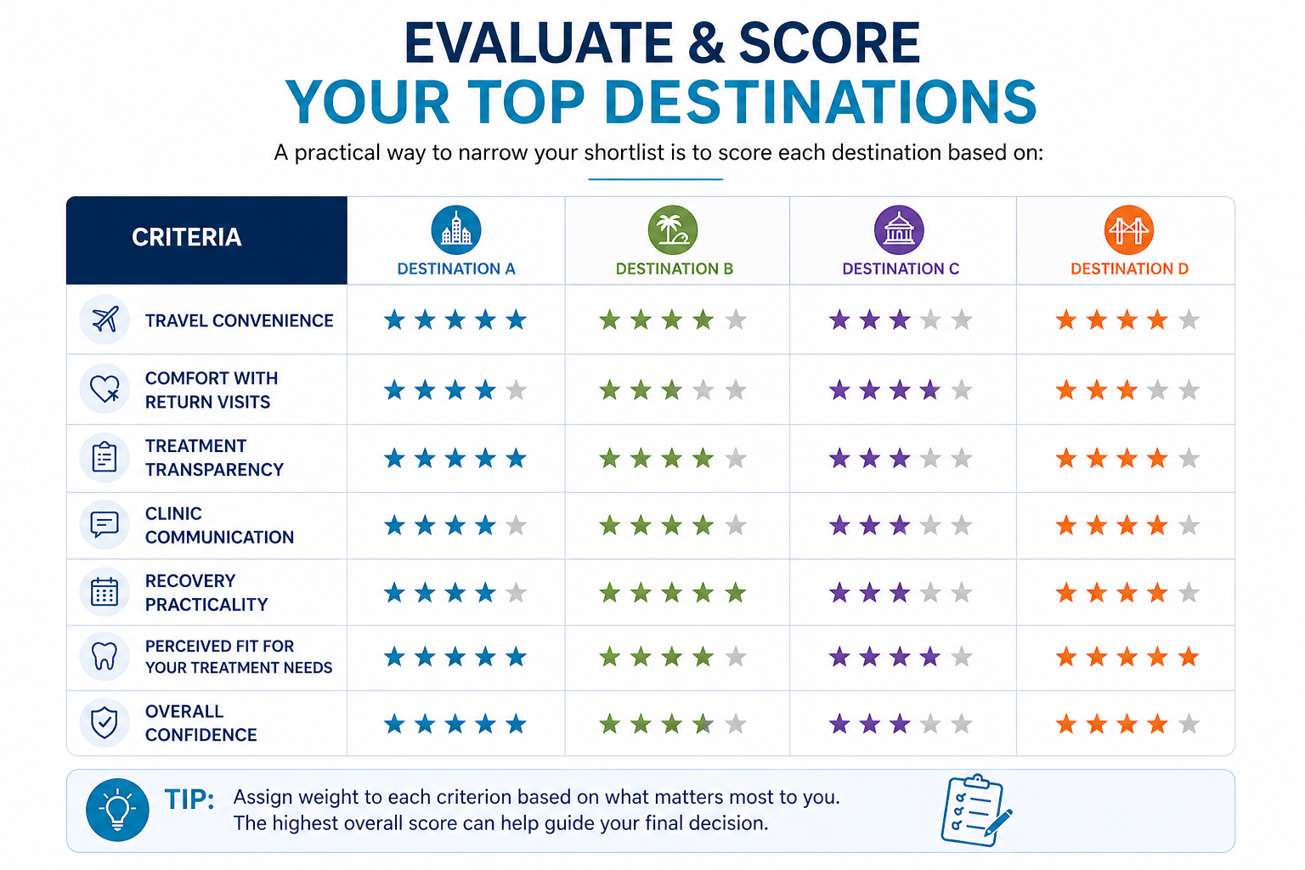
A practical way to narrow your shortlist is to score each destination based on:
- Travel convenience
- Comfort with return visits
- Treatment transparency
- Clinic communication
- Recovery practicality
- Perceived fit for your treatment needs
- Overall confidence
This approach helps you move away from “Which country is most famous?” and toward “Which destination and clinic combination makes the most sense for me?”
Step-by-Step Planning Guide for First-Timers
Once you have compared destinations, here is how to plan your dental trip abroad safely and realistically.
Step 1: Understand what treatment you may need
Before you compare countries or clinics, gather any useful information you already have. This may include recent X-rays, treatment recommendations, dental history, photos, and notes about symptoms or concerns.
The clearer your starting point, the easier it is to request meaningful treatment plans.
Step 2: Shortlist countries that fit your needs
At this stage, you are not trying to choose the universal best place to get dental work done overseas. You are trying to narrow your search to destinations that make sense for your treatment, budget, travel comfort, and likely need for follow-up.
Step 3: Compare clinics within those countries
Look beyond glossy advertising. Focus on dentist profiles, experience with your type of treatment, diagnostic approach, communication quality, and how clearly the clinic explains its process.
The best place in Europe for dental work is not defined by country reputation alone. The clinic matters just as much.
Step 4: Request preliminary treatment plans
Ask a few shortlisted clinics for a treatment estimate or preliminary plan based on your records. A useful response should explain the likely treatment, expected timeline, estimated cost, and any details that may only be confirmed after an in-person examination.
Step 5: Compare plans carefully
Do not compare quotes like hotel deals. Look at the logic behind the treatment plan, how clearly the clinic explains options, and whether the estimate feels realistic and transparent.
Step 6: Ask the right questions
Before booking, ask:
- Who will perform my treatment?
- What diagnostics will be done on arrival?
- Can the plan change after examination?
- What is included in the price?
- What is not included?
- Will I need more than one visit?
- How long should I stay after treatment?
- What aftercare support is available once I return home?
Step 7: Plan the full cost
Your real budget should include not only treatment, but also flights, accommodation, transfers, food, medication, time off work, and contingency funds.
Sometimes the best country for dental work in Europe changes once you calculate total travel cost, not just procedure price.
Step 8: Prepare for travel properly
Before you go, make sure you have confirmed your appointments, accommodation, travel timeline, and any pre-treatment instructions. If you are having surgical treatment, leave enough time for recovery and avoid tight return schedules.
Step 9: Prioritize treatment and recovery
It is fine to enjoy the trip, but recovery comes first. Stay close to the clinic if possible, allow time for check-ups, and do not overload your schedule after treatment.
Step 10: Take home written records
Before leaving, ask for a written summary of treatment, any relevant scans or images, material details, implant system information if applicable, prescriptions, and aftercare instructions.
Step 11: Stay engaged with aftercare
Once home, follow the clinic’s instructions carefully. Keep communication open, attend any recommended reviews, and involve your local dentist when appropriate for routine follow-up.
Red Flags to Watch For
As you compare clinics and destinations, be cautious of:
- Pressure to book quickly
- Vague or overly simple pricing
- No explanation of risks or treatment limits
- Poor communication before booking
- Unrealistic promises
- One-size-fits-all treatment plans
These warning signs matter far more than polished marketing.
First-Timer Checklist for Dental Treatment Abroad
Here is a simple checklist to make the process easier.
Research phase
- Understand your likely treatment needs
- Gather X-rays, photos, and dental history
- Shortlist a few realistic destinations
- Compare safety, standards, logistics, pricing, and aftercare
Clinic comparison phase
- Research clinics within each destination
- Review dentist experience and communication
- Request preliminary treatment plans
- Compare full cost, not just procedure price
- Ask detailed questions before booking
Travel planning phase
- Confirm appointments and timelines
- Book travel and nearby accommodation
- Prepare for recovery time
- Follow medical instructions before departure
Treatment trip phase
- Attend diagnostics and consultation
- Review any updates to the treatment plan
- Keep records and written instructions
- Focus on rest and follow-up
Return-home phase
- Follow aftercare instructions
- Keep contact with the clinic
- Share records with your local dentist if needed
- Monitor healing and report concerns promptly
Explore Options & Book Your Dental Treatment in Europe with Booking.Dentist!
If you are asking which country is best for dental treatment in Europe, the most useful answer is this: the right destination is the one that gives you the best combination of safety, transparency, clinical fit, travel convenience, and aftercare support.
There is no universal winner for every patient. The best country for dental work in Europe for you will depend on your treatment needs, your travel preferences, your confidence in the clinic, and how practical follow-up will be after you return home.
The good news is that once you compare countries carefully and then compare clinics within them, the decision becomes much easier and much more grounded.
Ready to compare clinics and plan your dental trip?
Explore trusted treatment options, compare destinations, and find clinics that match your needs on booking.dentist.