
If you’re thinking about improving your smile, you’ve probably come across both dental implants and veneers, and maybe realized they’re often discussed together even though they solve very different problems.
Many patients ask questions like:
- What is the difference between dental implants and veneers?
- Are veneers and dental implants the same?
- What is better: dental implants or veneers?
The short answer is: it depends on your teeth, your oral health, and what you’re trying to improve.
While both treatments can transform your smile, dental implants are designed to replace missing teeth, whereas veneers are mainly used to improve the appearance of existing teeth.
That difference matters more than many people realize. Choosing the right treatment can affect:
- long-term oral health
- functionality and comfort
- appearance
- treatment timeline
- overall cost over time
The good news is that you’re in the right place.
In this guide, we’ll walk you through the key differences between veneers and dental implants in a simple, practical way, without overly technical language or confusing dental jargon.
In this article you’ll learn:
- How each treatment works
- When implants may make more sense than veneers
- When veneers may be the better cosmetic option
- What to expect in terms of recovery, durability, and maintenance
- How dentists typically decide which treatment is appropriate
By the end, you’ll have a much clearer idea of which option may fit your goals, lifestyle, and dental needs best.
- What Are Dental Implants?
- Are Veneers and Dental Implants the Same?
- What Is Better: Dental Implants or Veneers?
- Which Option Lasts Longer?
- Aesthetic Differences Between Veneers and Implants
- Bone Loss and Oral Health Considerations
- Are Veneers More Painful Than Dental Implants?
- Cost vs Long-Term Value
- Can Dental Implants and Veneers Be Combined?
- Common Myths About Veneers and Implants
- Veneers and Cosmetic Dental Solutions
- Composite vs Porcelain Veneers
- Can Veneers Improve Your Smile Quickly?
- What Should You Consider When Choosing a Veneer Specialist?
- Veneer Consultation: What to Expect
- Questions Patients Commonly Ask
- Recovery and Treatment Time
- Cost Considerations
- Questions to Ask Before Choosing
- Not Sure Which Option Is Right for You?
What Are Dental Implants?
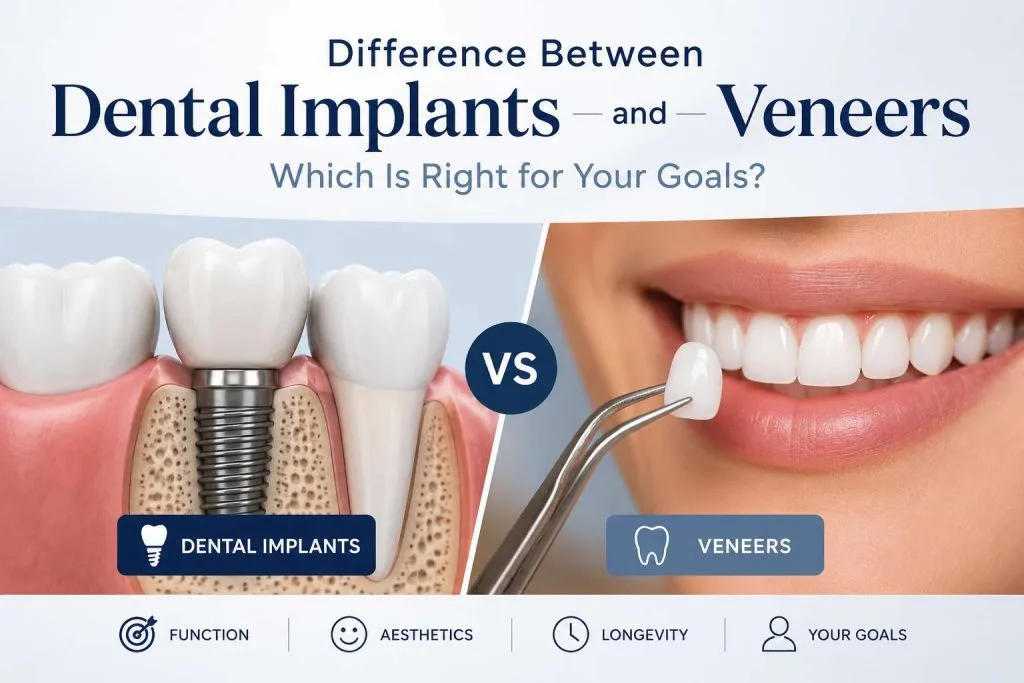
Dental implants are artificial tooth roots placed into the jawbone to replace missing teeth.
A typical implant consists of:
- a titanium implant post
- an abutment connector
- a crown placed on top
Unlike cosmetic treatments, implants restore both function and structure.
They are commonly recommended for people who:
- have one or more missing teeth
- want a permanent tooth replacement option
- experience difficulty chewing
- have bone loss from missing teeth
- want to prevent surrounding teeth from shifting
One major advantage of implants is that they help preserve jawbone density over time.
For patients comparing restorative solutions, it may help to compare treatment options based on long-term functionality, durability, and oral health needs.
When Dental Implants Make Sense
Dental implants are usually the better option if you:
- have missing or severely damaged teeth
- need full tooth replacement
- have advanced tooth decay
- have cracked teeth that cannot be restored
- want a long-term restorative solution
They are not primarily a cosmetic procedure , although they can significantly improve appearance.
What Are Veneers?
Veneers are thin custom-made shells placed over the front surface of teeth to improve their appearance. They are one of the most popular cosmetic dentistry treatments for patients who want a brighter, more symmetrical, and aesthetically balanced smile.
Veneers are typically made from:
- porcelain
- composite resin materials
Among these options, porcelain veneers are generally considered the premium solution because they offer:
- highly natural appearance
- strong stain resistance
- long-term durability
- translucent enamel-like aesthetics
Porcelain veneers are commonly used to improve:
- discoloration resistant to whitening
- chipped or worn teeth
- uneven tooth shape
- small gaps between teeth
- mild alignment imperfections
- overall smile symmetry
Unlike dental implants, veneers do not replace missing teeth.
Instead, they improve the appearance of existing teeth that are healthy or structurally stable enough to support cosmetic treatment.
Patients interested in aesthetic smile enhancement often explore porcelain veneers treatment in Hungary as part of a broader smile makeover or cosmetic dentistry plan.
Because veneers focus primarily on appearance rather than structural restoration, treatment planning usually depends on:
- enamel condition
- bite alignment
- gum health
- long-term cosmetic goals
In some cases, dentists may recommend alternative restorative treatments if the teeth are severely damaged or missing.
When Veneers Make Sense
Veneers are often recommended if you:
- want cosmetic smile improvements
- have healthy tooth roots
- want a faster aesthetic transformation
- have stains resistant to whitening
- want more symmetrical teeth
They are generally considered a cosmetic dentistry solution rather than a restorative one.
Patients interested in aesthetic smile enhancement can also explore porcelain veneers treatment and related cosmetic procedures.
Are Veneers and Dental Implants the Same?
No , veneers and dental implants are completely different treatments.
This is one of the most common misunderstandings among patients researching smile improvement options.
Think of it this way:
- dental implants replace a tooth
- veneers improve the appearance of a tooth that already exists
While both treatments can improve confidence and smile aesthetics, they are designed for different clinical situations.
Quick Comparison
| Feature | Dental Implants | Veneers |
| Main Purpose | Replace missing teeth | Improve appearance |
| Best For | Missing or severely damaged teeth | Cosmetic imperfections |
| Procedure Type | Surgical | Minimally invasive |
| Treatment Duration | Several months | Usually faster |
| Longevity | 15–25+ years | 10–15 years |
| Functional Support | High | Limited |
| Cosmetic Improvement | High | High |
Implants focus on rebuilding missing teeth and oral function.
Veneers focus on improving aesthetics and smile appearance.
What Is Better: Dental Implants or Veneers?
Neither treatment is universally “better.”
The right choice depends entirely on your dental condition, oral health, and long-term goals.
A useful way to think about it is:
- implants solve functional and structural problems
- veneers solve cosmetic and aesthetic concerns
For some patients, the answer is very straightforward.
For example, if a tooth is completely missing, veneers are not an option because there is no tooth surface to cover.
On the other hand, if the teeth are healthy but discolored or uneven, veneers may provide a faster and less invasive cosmetic solution.
Cost Differences Between Dental Implants and Veneers
Cost is often one of the biggest factors when comparing dental implants and veneers. However, the total price depends on much more than the procedure itself.
Patients should also consider:
- treatment complexity
- number of appointments required
- materials used
- long-term durability
- maintenance and replacement costs
- whether additional procedures are necessary
For example, dental implants may involve:
- surgical placement
- 3D imaging
- bone grafting in some cases
- healing appointments
- final crown restoration
Veneers, on the other hand, are usually focused on cosmetic enhancement and may require fewer treatment stages depending on the case.
Typical Treatment Cost Comparison
| Treatment | Typical Cost Factors | Long-Term Considerations |
| Dental Implants | surgery, implant components, crown, bone condition | high durability and functional restoration |
| Porcelain Veneers | material quality, number of veneers, smile design complexity | may eventually require replacement |
| Composite Veneers | resin material, chair time, repairs | lower upfront cost but shorter lifespan |
For many patients, the most important question is not simply:
“Which treatment is cheaper?”
but rather:
“Which treatment makes the most sense long term for my dental condition and goals?”
Patients considering restorative or cosmetic dentistry abroad often compare:
- treatment longevity
- aesthetics
- recovery requirements
- number of visits
- overall value over time
Those exploring restorative solutions can also compare dental implant treatment options in Hungary based on functionality, durability, and long-term oral health benefits.
Patients primarily interested in improving the appearance of their smile may explore porcelain veneers or more comprehensive smile makeover treatments depending on their aesthetic goals and the condition of their teeth.
What Usually Costs More Long Term?
Dental implants generally involve a higher upfront investment because they replace the entire tooth structure and require surgical treatment.
However, implants may provide stronger long-term value for patients with missing or severely damaged teeth because they:
- restore chewing function
- help preserve jawbone density
- reduce structural complications related to tooth loss
- can potentially last for decades with proper maintenance
Veneers are often less expensive initially and can create dramatic cosmetic improvements relatively quickly.
At the same time, veneers may eventually require:
- replacement
- repairs
- maintenance over time
The right choice depends on the patient’s oral health condition, cosmetic expectations, and long-term treatment priorities.
Quick Decision Guide
| Your Situation | Treatment Usually Recommended |
| Missing tooth | Dental implant |
| Chipped or stained teeth | Veneers |
| Severe tooth damage | Implant or crown |
| Smile makeover goals | Veneers |
| Bone loss after extraction | Implant |
| Functional chewing problems | Implant-based restoration |
In many cases, dentists may recommend combining treatments.
For example:
- implants for missing teeth
- veneers for visible cosmetic enhancement
Some patients also combine veneers with full smile makeover options for more comprehensive cosmetic improvements.
Many patients consider dental work abroad in Europe not only because of lower treatment costs, but also because of shorter waiting times, access to modern clinics, and the opportunity to combine treatment with travel. If you are researching options for treatment overseas, you can also explore this guide to Dental Work Abroad in Europe.
Dental Implants vs Veneers by Scenario
Scenario 1: Missing Tooth
If you are missing a tooth entirely, veneers are not an option.
A veneer requires an existing tooth structure.
In this situation, dental implants are typically the preferred treatment because they:
- replace the missing root
- restore chewing function
- prevent bone loss
- maintain facial structure
Scenario 2: Cosmetic Smile Improvement
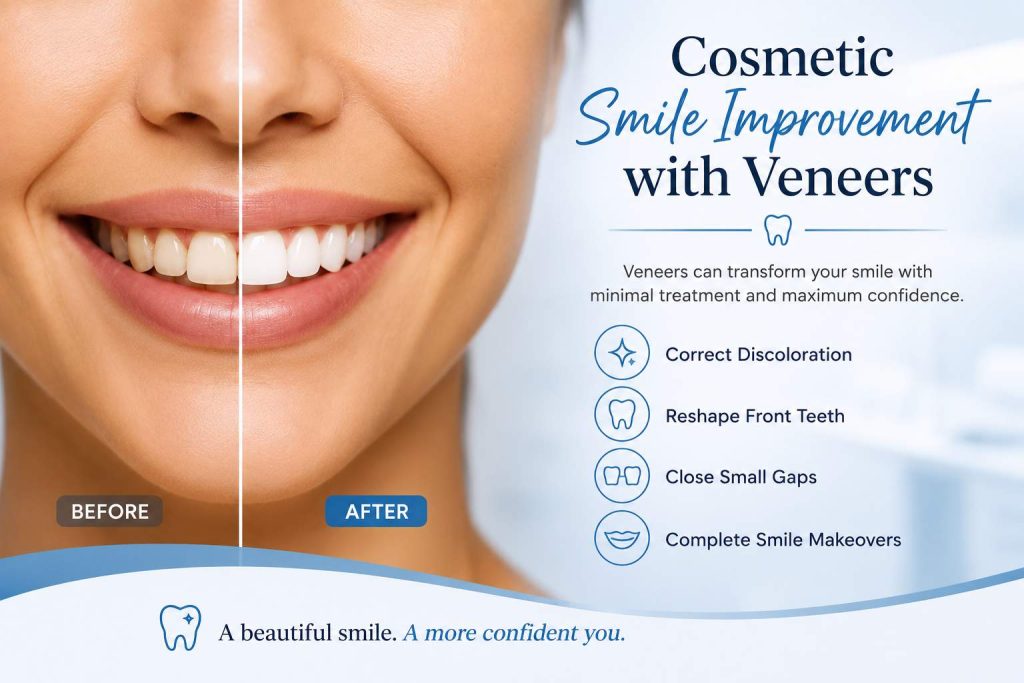
If your teeth are healthy but stained, uneven, or chipped, veneers may be the better choice.
Veneers can create a dramatic cosmetic transformation with minimal structural treatment.
They are especially popular for:
- smile makeovers
- correcting discoloration
- reshaping front teeth
- closing small gaps
Scenario 3: Severe Structural Damage
If teeth are cracked, heavily restored, or structurally compromised, implants may provide a more predictable long-term solution.
A dentist may recommend extraction followed by implant placement if the tooth cannot be saved.
In more advanced restorative cases, patients may also evaluate all-on-4 treatment options for full-arch rehabilitation.
Scenario 4: Bite Problems and Functional Issues
Patients with significant bite issues or advanced wear may require restorative treatment beyond veneers.
Depending on the condition of the teeth, dentists may recommend crowns or zirconia crown solutions to improve both strength and appearance.
Implants, crowns, orthodontics, or full-mouth rehabilitation may be more appropriate depending on the severity of the condition.
Which Option Lasts Longer?
One of the biggest differences between veneers and implants is long-term durability.
For many patients, this becomes one of the deciding factors when comparing treatment options.
Dental implants are considered a permanent restorative solution because they replace the entire tooth structure, including the root.
Veneers, on the other hand, are cosmetic restorations attached to the front surface of existing teeth.
Although veneers are highly durable, they are still cosmetic coverings rather than complete tooth replacements.
Average Lifespan
| Treatment | Typical Lifespan |
| Dental Implants | 15–25+ years |
| Porcelain Veneers | 10–15 years |
Implants can potentially last decades with proper oral hygiene and maintenance.
Veneers are durable, but they may eventually require replacement.
However, longevity depends heavily on factors such as:
- oral hygiene
- smoking habits
- teeth grinding
- bite pressure
- regular dental checkups
- diet and lifestyle
For example, patients who grind their teeth at night may place excessive pressure on veneers, increasing the risk of chipping or cracking.
Similarly, poor oral hygiene around implants can increase the risk of peri-implant disease and implant complications.
Maintenance Differences
Implants and veneers also differ in long-term maintenance requirements.
Dental Implants
Implants require:
- excellent oral hygiene
- healthy gums
- routine professional cleanings
- monitoring of surrounding bone and gum tissue
Although implants cannot develop cavities, gum disease around implants is still possible.
Veneers
Veneers require:
- careful brushing and flossing
- avoiding excessive force
- minimizing habits such as nail biting or chewing ice
- possible future replacement over time
Many dentists also recommend night guards for patients who clench or grind their teeth.
Aesthetic Differences Between Veneers and Implants
Although both treatments can improve appearance, the cosmetic outcome is often very different.
Veneers are designed specifically for smile aesthetics.
They are commonly used to:
- create uniform tooth shape
- brighten teeth appearance
- improve smile symmetry
- close small gaps
- reshape front teeth
Because veneers are customized individually, they can dramatically change the appearance of a smile.
This is why veneers are often associated with smile makeover treatments.
Dental implants, however, focus more on replacing missing teeth naturally and restoring functionality.
A successful implant restoration is designed to blend with surrounding teeth while maintaining chewing function and structural support.
Which Looks More Natural?
Both treatments can look highly natural when properly planned.
The outcome depends heavily on:
- treatment planning
- dentist experience
- material quality
- facial proportions
- bite alignment
- gum aesthetics
In cosmetic dentistry, natural-looking results are often more important than extremely white or overly uniform teeth.
Patients researching cosmetic improvement may also explore full smile makeover options depending on the extent of changes they want.
Bone Loss and Oral Health Considerations
One major difference between implants and veneers is how they affect long-term oral health.
When a tooth is missing, the jawbone in that area gradually begins to shrink.
This process is called bone resorption.
Because implants replace the tooth root, they help stimulate the jawbone and reduce long-term bone loss.
This is one reason implants are considered restorative rather than purely cosmetic.
Veneers do not affect the jawbone because they are placed on existing teeth.
Why Bone Preservation Matters
Bone loss may eventually affect:
- facial appearance
- bite alignment
- neighboring teeth stability
- future restorative options
Patients missing teeth for a long period may sometimes require:
- bone grafting
- sinus lift procedures
- additional restorative treatment
This is why many dentists recommend early treatment planning after tooth loss.
Are Veneers More Painful Than Dental Implants?
Patients are often surprised that veneers and implants involve very different treatment experiences.
Dental implants require oral surgery, while veneers are generally less invasive.
However, modern implant procedures are typically performed under local anesthesia, and many patients report less discomfort than expected.
Veneers Procedure Experience
Veneer preparation may involve:
- minor enamel reduction
- impressions or digital scans
- temporary veneers in some cases
Most patients experience minimal discomfort.
Dental Implant Procedure Experience
Implant surgery may involve:
- local anesthesia
- sedation in some cases
- post-operative healing
- temporary swelling or soreness
Recovery varies depending on:
- number of implants
- bone condition
- additional procedures
- individual healing response
Patients with dental anxiety often benefit from discussing treatment expectations in advance.
Cost vs Long-Term Value
Many patients initially focus only on treatment price.
However, the better question is often:
- which treatment provides better long-term value?
Dental implants usually involve higher upfront cost because they include:
- surgical placement
- implant components
- restorative crown
- imaging and planning
Veneers are usually less expensive initially, especially when treating a smaller number of teeth.
However, veneers may eventually require replacement.
Financial Considerations Beyond Price
When comparing treatments, patients should also evaluate:
- treatment longevity
- maintenance costs
- future replacement needs
- functionality
- oral health impact
- number of appointments required
For patients with missing teeth, implants often provide stronger long-term value because they restore function as well as aesthetics.
Many patients explore dental treatment options in Europe because procedures such as implants, veneers, and full smile makeovers can often be significantly more affordable than in countries like the UK (learn more) or the United States. If you want to better understand pricing, treatment options, and popular destinations, you can also explore this guide to dental implants in Europe.
Can Dental Implants and Veneers Be Combined?
Yes , many patients combine implants and veneers as part of a larger restorative or cosmetic treatment plan.
For example:
- implants may replace missing teeth
- veneers may improve visible front teeth
- crowns may restore damaged teeth
This approach is common in full smile rehabilitation cases.
Combination Treatment Example
A patient may:
- replace a missing molar with an implant
- use veneers to improve front teeth appearance
- combine whitening and bite adjustments
The advantage of combination treatment is that it allows dentists to address:
- aesthetics
- functionality
- symmetry
- bite stability
- long-term oral health
Patients considering broader cosmetic improvements may also explore full smile makeover options depending on treatment goals.
Common Myths About Veneers and Implants
Myth 1: Veneers Replace Missing Teeth
This is incorrect.
Veneers require existing tooth structure.
They cannot replace a completely missing tooth.
Myth 2: Dental Implants Are Only Cosmetic
Implants are restorative treatments designed to restore:
- chewing ability
- bite stability
- jawbone preservation
- tooth function
Cosmetic improvement is only one part of the benefit.
Myth 3: Veneers Always Look Fake
Modern porcelain veneers can look extremely natural when designed properly.
The final appearance depends on:
- tooth proportions
- translucency
- smile design
- dentist experience
Myth 4: Implants Require Constant Maintenance
Implants require oral hygiene similar to natural teeth.
Routine dental care and regular checkups are usually sufficient for long-term maintenance.
Veneers and Cosmetic Dental Solutions
Veneers are one of the most popular cosmetic dental treatments because they can dramatically improve the appearance of a smile without replacing the entire tooth.
Patients often choose veneers to address:
- discoloration
- uneven tooth shape
- chipped teeth
- worn enamel
- spacing issues
- smile asymmetry
Modern cosmetic dentistry focuses increasingly on natural-looking results rather than overly bright or artificial smiles.
Many patients today prefer subtle aesthetic improvements that preserve facial harmony and natural tooth proportions.
This is why treatment planning and dentist experience play such an important role in cosmetic dentistry outcomes.
Patients exploring cosmetic improvements may also compare:
- porcelain veneers
- composite veneers
- crowns
- whitening treatments
- orthodontics
- smile makeover procedures
Depending on the condition of the teeth, dentists may recommend combining multiple cosmetic and restorative approaches.
Composite vs Porcelain Veneers
Patients researching veneers often ask about the difference between composite and porcelain veneers.
Although both improve aesthetics, they differ significantly in durability, appearance, and long-term maintenance.
Composite Veneers
Composite veneers are made from tooth-colored resin material applied directly to the teeth.
Advantages may include:
- lower upfront cost
- faster treatment
- easier repairs
- less tooth preparation in some cases
However, composite veneers may stain more easily and usually have a shorter lifespan.
Porcelain Veneers
Porcelain veneers are custom-made ceramic shells fabricated in a dental laboratory.
They are generally known for:
- stronger stain resistance
- more natural translucency
- improved durability
- highly aesthetic appearance
Patients interested in long-term cosmetic enhancement often explore porcelain veneers treatment as part of smile makeover planning.
Quick Comparison
| Feature | Composite Veneers | Porcelain Veneers |
| Durability | Moderate | High |
| Appearance | Good | Highly natural |
| Lifespan | Shorter | Longer |
| Stain Resistance | Lower | Higher |
| Cost | Lower | Higher |
| Treatment Time | Faster | Multiple steps |
Can Veneers Improve Your Smile Quickly?
Yes , veneers are often considered one of the fastest cosmetic dental solutions for improving smile appearance.
Unlike orthodontic treatment, which may take months or years, veneers can often transform visible teeth in a relatively short timeframe.
Patients commonly choose veneers for:
- wedding preparation
- professional appearance improvements
- smile makeovers
- confidence enhancement
- correcting visible cosmetic imperfections
However, treatment speed depends on:
- number of teeth treated
- material selection
- smile design complexity
- oral health condition
- whether additional treatment is needed first
Patients considering broader aesthetic changes may also evaluate full smile makeover options depending on treatment goals.
What Should You Consider When Choosing a Veneer Specialist?
Choosing a cosmetic dentist is an important decision because veneers require both technical precision and aesthetic planning.
Since veneer treatment often involves irreversible enamel modification, proper treatment planning is essential.
Important Factors to Evaluate
Experience With Cosmetic Dentistry
Patients should evaluate whether the dentist regularly performs veneer and smile makeover procedures.
Experience with cosmetic cases may significantly affect:
- symmetry
- tooth proportions
- smile balance
- natural appearance
Before and After Cases
Reviewing previous patient cases may help patients better understand:
- aesthetic style
- treatment consistency
- natural-looking results
- smile design approach
Treatment Planning Process
A high-quality veneer consultation may include:
- digital smile design
- facial analysis
- bite evaluation
- X-rays or scans
- discussion of long-term expectations
Patients comparing cosmetic options may also explore full smile makeover options or restorative alternatives depending on oral health condition.
Material Selection
Different materials may produce different results.
Patients should understand:
- porcelain vs composite differences
- expected longevity
- maintenance requirements
- stain resistance
- aesthetic characteristics
Veneer Consultation: What to Expect
A veneer consultation is usually the first step in determining whether veneers are appropriate.
During consultation, dentists may evaluate:
- oral health
- gum condition
- tooth alignment
- bite function
- cosmetic goals
- enamel thickness
Patients may also discuss:
- desired smile appearance
- shade preferences
- treatment limitations
- maintenance expectations
- alternative treatments
In some cases, dentists may recommend restorative treatment instead of veneers if teeth are severely damaged or structurally compromised.
This is one reason why patients sometimes compare veneers with implants, crowns, or orthodontic solutions.
Questions Patients Commonly Ask
Can You Get Veneers Instead of Implants?
Only if the natural tooth still exists and is structurally healthy.
If the tooth is missing, veneers are not an alternative to implants.
Are Veneers Faster Than Implants?
Yes.
Veneers are generally completed faster because they do not require surgical healing.
Implants often involve a healing period before final restoration.
Which Option Is Better for Front Teeth?
This depends on the condition of the tooth.
- healthy but discolored teeth may benefit from veneers
- missing or severely damaged teeth may require implants
Which Treatment Is More Permanent?
Implants are generally considered more permanent because they replace the tooth root.
However, both treatments can last many years with proper care.
Recovery and Treatment Time
Treatment timelines are very different between veneers and implants.
Veneers are usually completed faster because they focus on the visible portion of the teeth.
Implants require healing time because the implant integrates with the jawbone.
Veneers Timeline
Typical veneer treatment may include:
- consultation and smile evaluation
- tooth preparation
- digital scans or impressions
- veneer placement
Depending on the case, veneers may sometimes be completed in a relatively short timeframe.
Dental Implant Timeline
Implant treatment is more complex and often includes:
- consultation and 3D imaging
- implant placement surgery
- healing and osseointegration
- placement of the final crown
Some cases may also require:
- bone grafting
- sinus lift procedures
- temporary restorations
Complex implant cases may involve multiple visits over several months.
Cost Considerations
Dental implants are generally more expensive because they involve surgery and full tooth replacement.
Veneers are usually less expensive per tooth, but total treatment cost depends on:
- number of teeth treated
- materials used
- complexity of the case
- additional restorative work
When comparing options, long-term durability and functionality are important factors , not only initial price.
Questions to Ask Before Choosing
Before deciding between implants and veneers, consider asking:
- Is the tooth healthy enough for veneers?
- Do I need restorative or cosmetic treatment?
- Is bone loss present?
- What are the long-term maintenance requirements?
- How many appointments are required?
- What are the risks and limitations?
A personalized consultation is usually necessary to determine the best option.
Not Sure Which Option Is Right for You?
Choosing between dental implants and veneers is not always straightforward.
Some patients need restorative treatment because of missing or damaged teeth, while others are primarily looking for cosmetic improvements.
The best option depends on factors such as:
- your oral health condition
- bone and gum health
- smile goals
- bite functionality
- long-term durability expectations
- budget and treatment timeline
Booking Dentist can help you better understand which treatment may fit your situation.
By comparing treatment options, clinic recommendations, and personalized treatment plans, patients can make more informed decisions before starting treatment.
If you are considering smile restoration or cosmetic dentistry, you can request a personalized treatment plan or explore different restorative and cosmetic solutions based on your goals.